A proper fuel system diagnostic is more than plugging in a code reader. Here's what your mechanic should actually be testing, and what those results mean for your wallet.
Diesel Fuel System Diagnostics: What Your Mechanic Should Actually Be Checking
I'm going to be blunt with you. At least once a week, someone rolls into our shop in Nisku after spending hundreds of dollars at another shop on a "fuel system diagnostic" that was really just a guy plugging in a code reader and telling them to replace an injector. That's not a diagnostic. That's a guessing game, and you're the one paying for it.
A real fuel system diagnostic on a modern common-rail diesel is methodical, data-driven, and honestly kind of beautiful when it's done right. Let me walk you through what we actually do at Black Sky Diesel, so you know what to expect and what to demand from whoever works on your truck.
Why Fuel System Problems Are So Tricky
Your diesel fuel system operates at insane pressures. We're talking 26,000 to 29,000 PSI in a modern common-rail system. For perspective, your household water pressure is about 60 PSI. At those pressures, even a tiny issue — a worn seal, a degraded injector nozzle, a weak fuel pump — can cause all kinds of symptoms that seem unrelated.
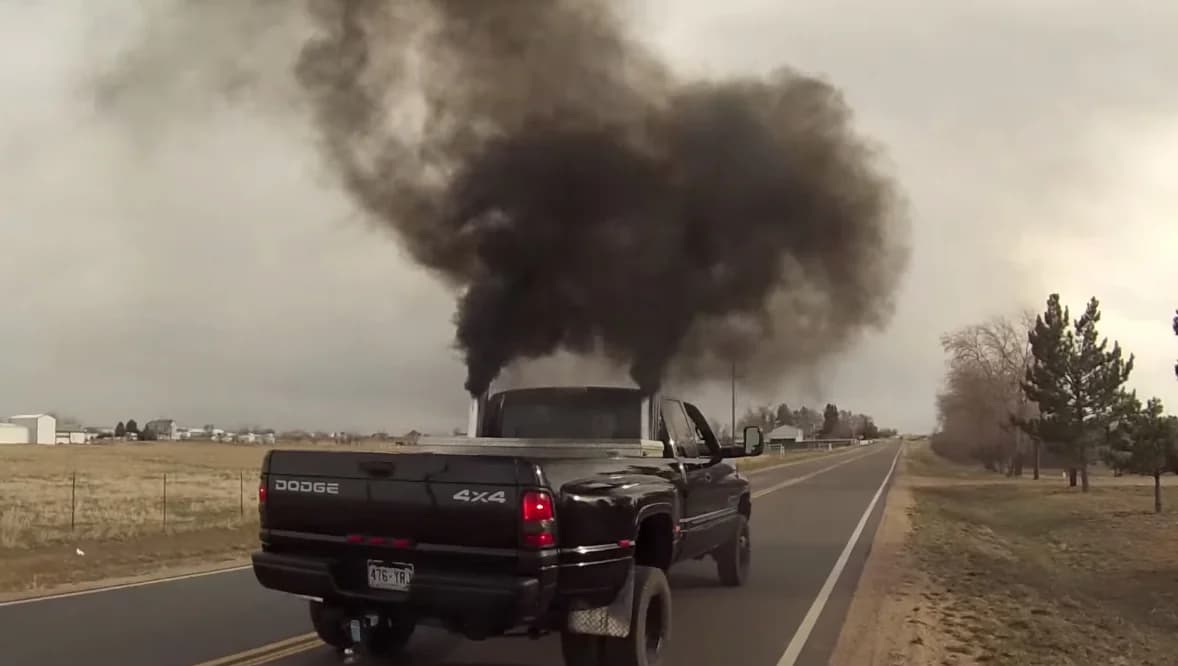
Common complaints we hear: hard starting (especially in cold Alberta mornings), rough idle that smooths out at higher RPMs, loss of power under load, white or black smoke, poor fuel economy getting worse over time, and engine surging. Every single one of those could be caused by three or four different fuel system components. That's why a code is just the starting point.
Step 1: The Scan Tool Is Just the Beginning
Yes, we start with a scan tool. But not just any scan tool. We use OEM-level diagnostic software that gives us way more data than a generic code reader from the parts store. We're looking at active and stored fault codes, freeze frame data (what the engine was doing when the code set), and real-time fuel system pressures, temperatures, and correction values.
A P0087 code (fuel rail pressure too low) tells us something is wrong. But it doesn't tell us if the problem is the lift pump, the high-pressure fuel pump, a leaking injector, a bad pressure relief valve, or a restriction in the fuel supply line. That's where the real work begins.
Step 2: Fuel Pressure Testing at Multiple Points
This is where a lot of shops cut corners. A proper diagnostic means testing pressure at multiple locations in the system.
Lift pump pressure. Your lift pump pulls fuel from the tank and delivers it to the high-pressure pump. On a Cummins 6.7, this should put out around 8-10 PSI at idle and maintain that under load. If it's weak, the high-pressure pump starves, and you get all kinds of driveability problems.
Real example: we had a customer last fall with a 2019 Ram 3500 losing power on the highway. Another shop replaced an injector. Didn't fix it. Replaced the high-pressure fuel pump. Didn't fix it. The problem was a $200 lift pump putting out 4 PSI instead of 10. Two thousand dollars in unnecessary parts because nobody checked the basics first.
Rail pressure at idle and under load. We monitor actual rail pressure versus commanded pressure. The delta between what the ECM is asking for and what it's getting tells us a lot about where the problem is.
Return fuel volume. This is one of the most important tests that a lot of shops skip entirely. Every injector has a return line that sends unused fuel back to the tank. If an injector is worn internally, it'll return more fuel than it should. We measure return volume from each injector individually. If one injector is returning twice as much as the others, we've found our problem without replacing all six.
Step 3: Injector Balance Rate Testing
This is the test that separates a real diesel shop from a parts swapper. Injector balance rates tell us how hard each injector is working compared to the others.
The ECM constantly adjusts fuel delivery to each cylinder to keep the engine running smoothly. If one injector is worn or clogged, the ECM compensates by adjusting fuel for that cylinder. The balance rate numbers show exactly how much compensation is happening.
On a Cummins, you want balance rates within plus or minus 3-4 mm3 at idle. If cylinder number 3 is at +7 and everything else is within spec, that's a bad injector on cylinder 3. No guessing, no replacing all six "just to be safe." On a Duramax, we look at fuel rate corrections and contribution values. On a Power Stroke, injector buzz tests and relative compression.
If your mechanic can't tell you which specific injector is bad and show you the data that proves it, they're guessing.
Step 4: High-Pressure Fuel Pump Evaluation
The CP3 or CP4 is the heart of the fuel system. It takes low-pressure fuel from the lift pump and pressurizes it to common-rail operating pressure. These pumps are expensive ($1,500-$3,000), so you want to be certain before replacing.
We evaluate by monitoring how quickly it builds pressure during cranking, watching stability at idle (shouldn't fluctuate more than 200-300 PSI), loading the engine and watching for pressure drop-off, and checking for internal bypass via fuel temperature.
If you have a CP4 (common in 2011-2016 Duramax and some Power Strokes), these are known for catastrophic failures that send metal debris through the entire fuel system. Some customers have switched to CP3 conversions as prevention, and honestly, I think that's money well spent for long-term ownership.
Step 5: Fuel Quality and Contamination Check
We pull a fuel sample and check for water contamination (even small amounts damage injectors over time), algae or biological growth (clogs filters and damages injectors), fuel gel or wax (common in Alberta winters), and contamination from bad fuel sources. One bad tank of fuel from a sketchy station can cause weeks of problems.
Step 6: The Fuel Filter Situation
You'd be shocked how often a "fuel system problem" is a plugged fuel filter. In Alberta with dust from gravel roads and construction sites around Nisku and Leduc, filters plug faster than the manufacturer recommends. We typically suggest changing fuel filters every 15,000-20,000 km for gravel road driving, versus the manual's 30,000-40,000 km.
We also check the filter housing and fuel heater. A stuck-open fuel heater can overheat fuel and cause vapor lock. A cracked filter housing sucks air into the system and causes hard starting.
What a Complete Diagnostic Report Should Include
- All fault codes with explanations
- Fuel pressure readings at idle and under load
- Injector balance rates for each cylinder
- Return fuel volume measurements
- Fuel sample analysis results
- Recommended course of action with estimates
- Priority ranking (what's urgent versus what can wait)
If your mechanic hands you a paper that just says "replace injectors" with no supporting data, push back. Ask for balance rate numbers. Ask which injectors specifically and why. A good shop will be happy to show you the data.
When to Get a Fuel System Diagnostic
Don't wait until your truck is barely running. Warning signs: check engine light with fuel system codes, more than 10% drop in fuel economy, any change in exhaust smoke, hard starting getting worse, unusual fuel system noises, or after buying a used truck before any major trip or towing season.
A proper diagnostic takes 1-2 hours. It's not cheap, but it's a lot cheaper than replacing parts you don't need.
Ready to get your fuel system checked properly? Book a diagnostic appointment at Black Sky Diesel or call us for a quote. We'll get to the bottom of it.
Tagged
Black Sky Diesel
Black Sky Diesel Team
Industry-leading diesel performance specialists based in Alberta. We share our hands-on expertise in diagnostics, tuning, and builds to help you get the most from your diesel engine.