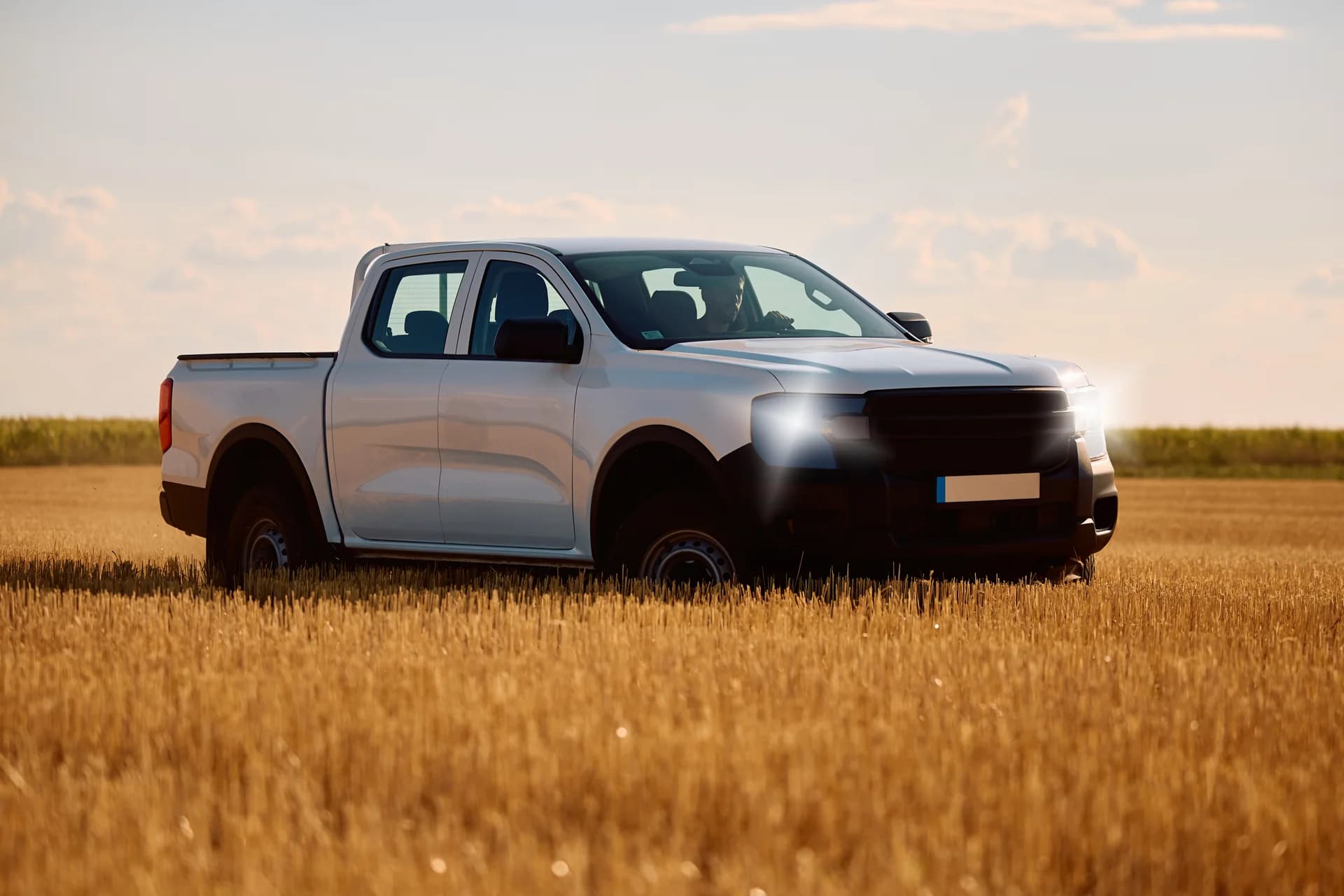
Your diesel truck sitting dead in the driveway at -40 is more than an inconvenience. Travis Anderson from Black Sky Diesel breaks down exactly why cold starts fail and what you can do to prevent it.
Why Your Diesel Won't Start at -40: A Nisku Mechanic's Cold Start Survival Guide
If you've lived in Alberta long enough, you've had that morning. You wake up, check your phone, and see that little minus sign followed by a number that makes you question your life choices. You throw on your Carhartts, trudge outside, hop in your truck, turn the key, and... nothing. Maybe a slow, groaning crank. Maybe just a click. Your diesel is not having it today.
I'm Travis Anderson, owner of Black Sky Diesel here in Nisku. Every January my phone blows up with the same call: "My truck won't start." So here's exactly what's happening and what you can do about it.
Why Diesels Hate the Cold (More Than You Do)
Diesel engines don't have spark plugs. They rely on compression ignition — the engine compresses air until it's so hot that diesel fuel ignites on contact. At -30 or -40, everything works against you:
Your oil turns into molasses. Even 15W-40 gets thick in extreme cold. The starter motor has to fight through that thick oil to crank the engine fast enough to build compression. If it can't spin fast enough, you don't get enough heat in the cylinder to ignite fuel. That's the painfully slow cranking sound.
Your batteries lose power. A fully charged battery at room temperature delivers 100% of its rated cranking amps. At -40, that same battery might only deliver 40-50%. Right when your starter needs the most juice, your battery has the least to give. Bad combination.
Your fuel gels. Standard #2 diesel fuel contains paraffin wax. At normal temperatures, that wax stays dissolved. Below about -15 to -20, wax crystals form, clogging fuel filters and blocking fuel lines. If your fuel has gelled, no amount of cranking is going to help.
Glow plugs matter more than ever. Your diesel has a pre-heat system — glow plugs or a grid heater. These heat the combustion chamber before starting. If even one or two are weak, you might get away with it in September. At -35, you'll notice immediately.
The Block Heater: Your Best Friend
I'll be blunt. If you own a diesel in Alberta and you're not plugging in your block heater, you're asking for trouble. Full stop.
A block heater keeps your engine coolant warm, which keeps the block warm, which means your oil stays thinner and your engine cranks easier. It's the single most effective thing you can do for cold starts.
How long? You don't need 8-10 hours. In most cases, 3-4 hours before starting is enough. If you're on a timer (and you should be — it saves electricity), set it to kick on around 3 or 4 AM for a morning start.
Check your cord. Plug in your truck and feel the upper radiator hose after an hour. If it's warm, your block heater is working. If it's stone cold, the cord is cracked, the plug is corroded, or a mouse chewed through the wire. Also check the element itself — they burn out over time and are cheap to replace.
Fuel Treatment: Prevention Is Everything
Use a winter fuel additive every fill-up from November through March. Products like Howes Diesel Treat, Power Service Diesel Fuel Supplement, or Hot Shot's Secret all work well. Add it before you fuel up so it mixes properly. Don't just pour it on top of a full tank.
If your fuel has already gelled, don't keep cranking. You'll drain your batteries and potentially damage your starter. Get the truck somewhere warm or use an emergency de-gel product. Prevention is 10x easier than the cure.
Battery Health and Glow Plugs
Get your batteries tested in October. Not in January when you're stranded. A load test tells you how much cranking power you have left. Diesel trucks run dual batteries — if one is weak, it drags the other down. Keep terminals clean and consider upgrading to higher CCA batteries.
Test your glow plugs. A failed glow plug on a Duramax might not throw a code right away. But at -30, that one dead glow plug is the difference between starting and calling a tow truck. We test glow plugs regularly at Black Sky Diesel. It's a quick check.
The Cold Start Routine That Works
- Plug in your block heater 3-4 hours before starting (or overnight)
- Cycle the glow plugs — key on, wait for the Wait to Start light, key off, key on, wait, then crank
- Don't crank for more than 10-15 seconds — wait 30 seconds between attempts
- Once started, idle for 2-5 minutes then drive gently until warm
When to Call for Help
If you've tried everything and the truck won't fire, stop cranking. Continuing to crank can damage the starter, permanently drain batteries, and hydro-lock the engine if raw fuel pools in the cylinders.
At Black Sky Diesel, we handle cold start no-starts all winter long. Whether it's gelled fuel, dead glow plugs, a worn-out block heater, or batteries that need replacing, we'll get you back on the road. We're right here in Nisku, serving the Edmonton area, Leduc, Beaumont, and the Nisku industrial area.
Need help getting your truck winter-ready? Give us a call at Black Sky Diesel or book online. We'll make sure your rig is ready for whatever Alberta throws at it.
Tagged
Black Sky Diesel
Black Sky Diesel Team
Industry-leading diesel performance specialists based in Alberta. We share our hands-on expertise in diagnostics, tuning, and builds to help you get the most from your diesel engine.